Energy-based models, explained with one tower.
An energy-based model gives every answer a score: low when it fits, high when something contradicts. How that works, and how PRISM uses the spike to correct itself.
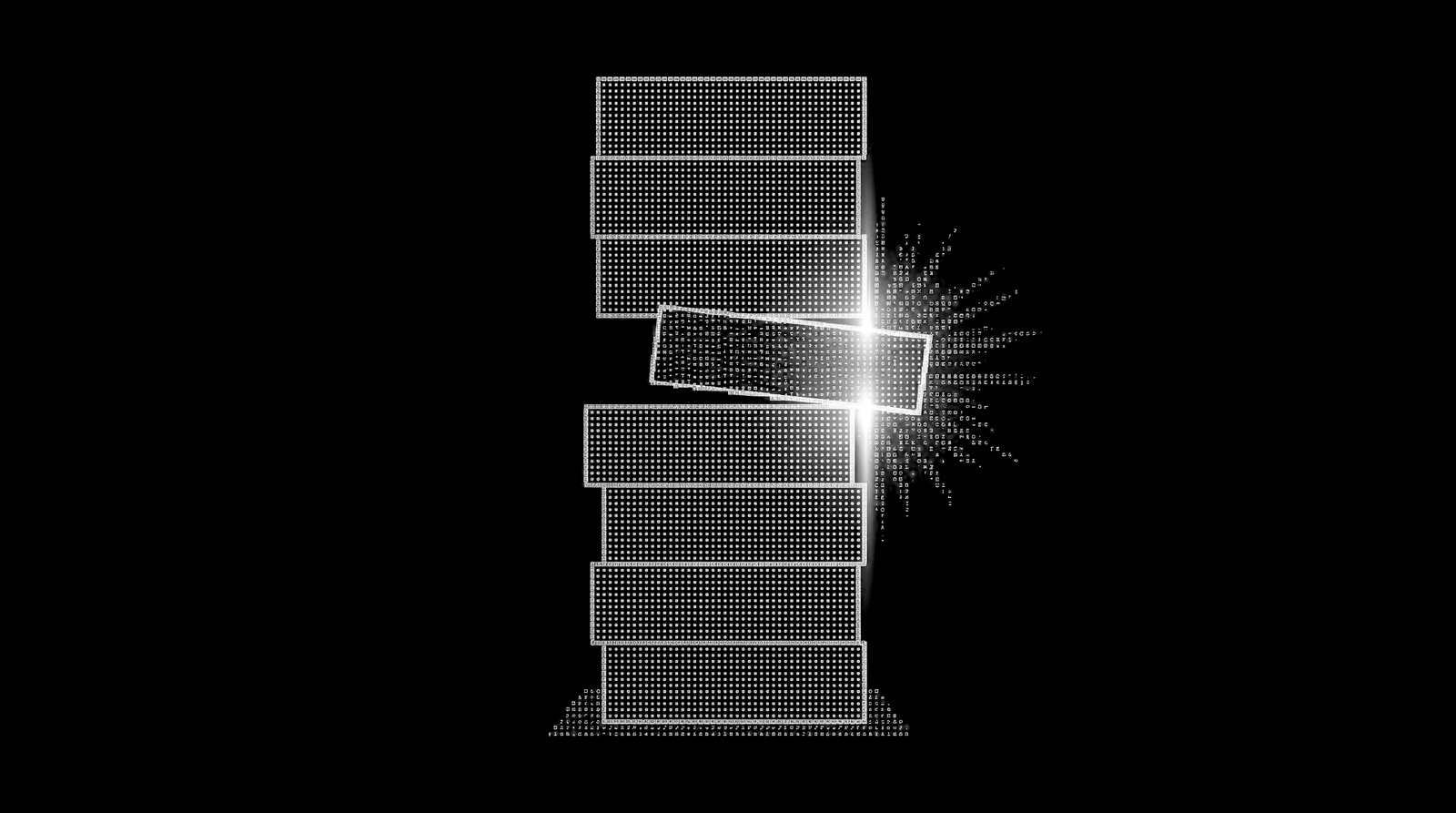
An energy-based model gives every possible answer a score called energy. Low energy means the answer fits everything the model knows; high energy means something contradicts. In PRISM, Synapse Net's model, a spike in energy is a warning: the answer is corrected before it is ever said.
A score for "does this fit?".
Most AI models output a probability: how likely is this next word. An energy-based model outputs a compatibility score between a question and a candidate answer. It does not need the answer to be likely, it needs it to be consistent.
Reasoning then becomes a search: among the possible answers, find the one with the lowest energy. The tower above is that score. Short and green, the answer fits. Tall and red, something in it contradicts.
Why a contradiction is useful.
In PRISM, the energy is not just a final grade. It is measured while the model reasons. When a line of thought starts to contradict itself, the energy of the system rises, and that rise triggers a correction before any text is produced. We call it a cognitive immune system.
A next-word model has no equivalent signal: a fluent wrong sentence and a fluent right one look the same to it.
Where the idea comes from.
Energy-based learning was laid out by Yann LeCun and colleagues in 2006 and sits underneath today's JEPA models. It is famously hard to train: a naive model learns to give everything low energy. Making it work at scale is the hard part, and the part we are building.
What is proven.
PRISM's self-correction runs today in our proof of concept and is shown live. The seed round takes it to NVIDIA Blackwell hardware to measure how it scales.
Short answers
Straight answers to what investors and partners ask us first.
A model that scores how well an answer fits a question: low energy for a good fit, high energy for a contradiction. The best answer is the one with the lowest energy.
A transformer LLM outputs the probability of the next word. An energy-based model scores whole answers for consistency, so it can tell a fluent wrong answer from a right one.
They underpin JEPA research and a new group of reasoning companies. PRISM uses the energy signal for self-correction and an audit trail.
See it working.
We show the PRISM proof of concept live, and share the technical brief and data room with qualified investors and partners.
Nothing on this website is an offer to sell or a solicitation to buy securities.