Can LLMs reason? No. They predict what reasoning looks like.
A large language model predicts the next word from probabilities. Why that looks like reasoning, why it is not, and what the model makers' own research shows.
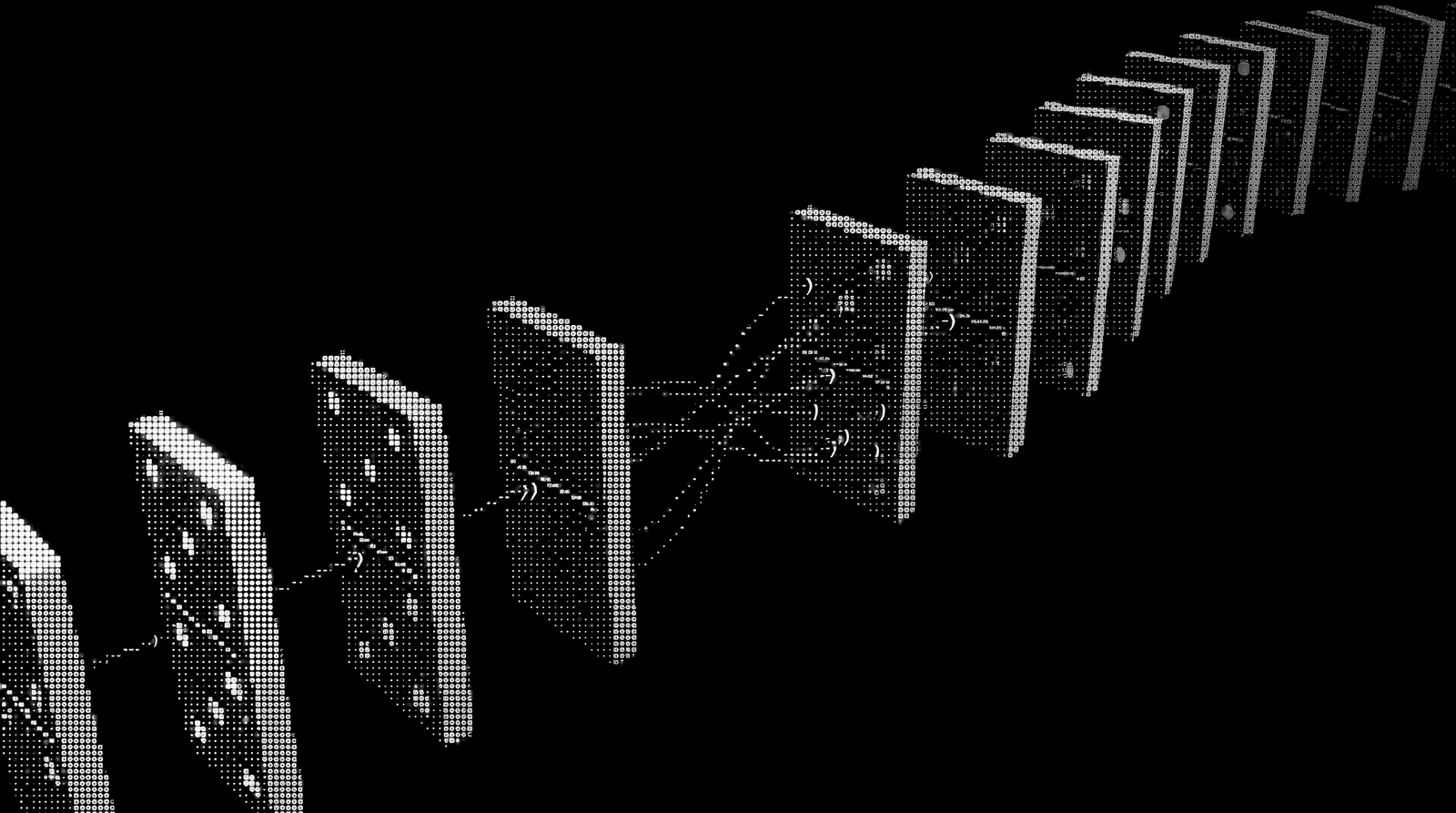
No. A large language model, including the ones that "think" before answering, does one thing: it predicts the most likely next word from probabilities learned from text. Text written by people who reason looks reasoned, so the prediction often looks logical. But the mechanism never checks logic. When the prediction is wrong, nothing inside the model notices, and it can defend the mistake as fluently as a fact.
What actually happens inside.
At every step, a transformer turns the text so far into a probability for every possible next word, picks one, and repeats. Training makes those probabilities match human writing. Fine-tuning and "reasoning" modes change which words become likely. None of them add a step that tests whether a statement is true or follows from the one before.
That is not a criticism of how useful these models are. It is a description of what they are: very good predictors of text.
Logic is in the training data.
People write down their reasoning, so the patterns of reasoning are in the text the model learns from. A question that resembles thousands of solved ones gets an answer that resembles their solutions. That is why the output is often right, and why it can sound right even when it is not.
Mistakes that make no sense, explained as if they did.
Because nothing checks the logic, a model can produce things that exist nowhere in reality: invented court cases, sources and numbers. Worse, when you point out the error and give it the correct logic, it can argue, explain the mistake away, or agree with you for the wrong reasons. The explanation is predicted too.
This is not our claim alone. The companies that build these models have published it themselves.
In the model makers' own words.
Anthropic, which builds Claude, traced what happens inside its own model. Asked how it added two numbers, Claude described the school method of carrying the one, while internally it had done something else. Given a wrong hint, it sometimes worked backwards to reach the hinted answer, producing what Anthropic calls a plausible-sounding argument designed to agree with the user rather than to follow logical steps.
In a second study, Anthropic's reasoning models mentioned the hint that actually shaped their answer only 25% of the time for Claude 3.7 Sonnet and 39% for DeepSeek R1. Most of the written reasoning did not reflect what drove the answer.
Apple researchers tested reasoning models on puzzles of rising difficulty and found a complete accuracy collapse beyond a certain complexity. Even when given the explicit algorithm to solve the puzzle, the models failed to use it.
OpenAI researchers argued in 2025 that hallucinations follow from how language models are trained and evaluated: guessing is rewarded over admitting uncertainty.
Useful for language. Not built for decisions that must be right.
For drafting, summarizing and conversation, prediction is often good enough. For a credit decision, a grid command or a defense system, an answer that is usually right and cannot show how it was reached is a liability.
PRISM is built the other way around. It learns basic truths, scores every answer for consistency before it speaks, and shows the full spectrum of what happened while it reasoned. How PRISM works.
Short answers
Straight answers to what investors and partners ask us first.
ChatGPT predicts the next word from probabilities. Its output often looks reasoned because it learned from text written by people who reason, but the mechanism does not check logic.
They predict longer chains of text before the answer, which often improves results. Anthropic's own research found that this written reasoning frequently does not reflect what actually drove the answer.
Scale makes mistakes rarer. It does not change the mechanism, which remains prediction. A step that checks the logic has to be part of the architecture.
See it working.
We show the PRISM proof of concept live, and share the technical brief and data room with qualified investors and partners.
Nothing on this website is an offer to sell or a solicitation to buy securities.